Enterprise
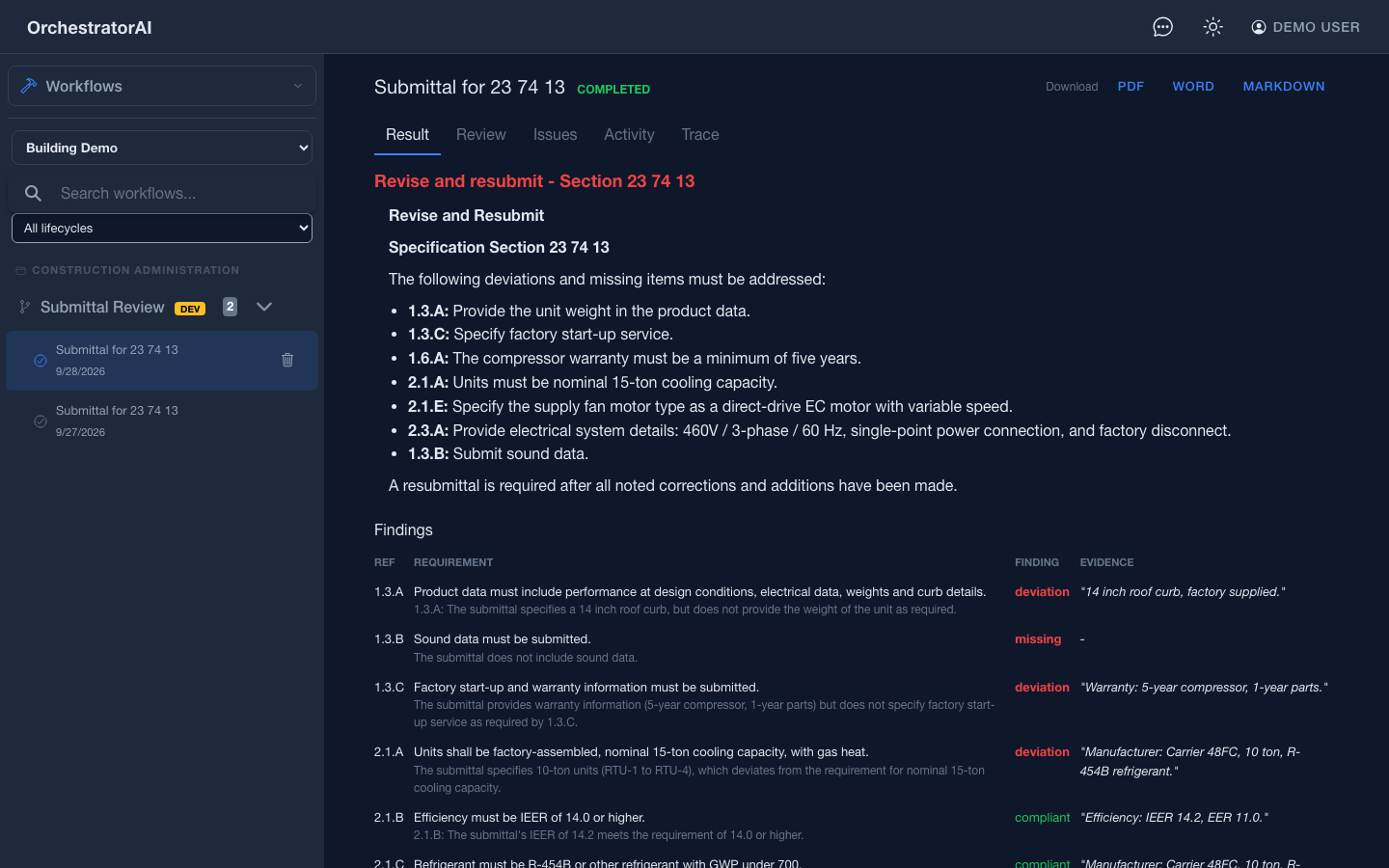
Agents, workflows, ambient automation, admin and agent-to-agent access in one app and one API, running on infrastructure the organization controls. It is the platform the services above are delivered on.
OrchestratorAI
We wire agents and workflows into the tools your people already use, teach your team to build their own, and put guardrails around all of it. The models can run on hardware you own, a person stays inside the workflow where it matters, and it all runs on infrastructure you control.
Talk to usWhat we doConsulting
Services
Agents and workflows wired into the tools your people already use.
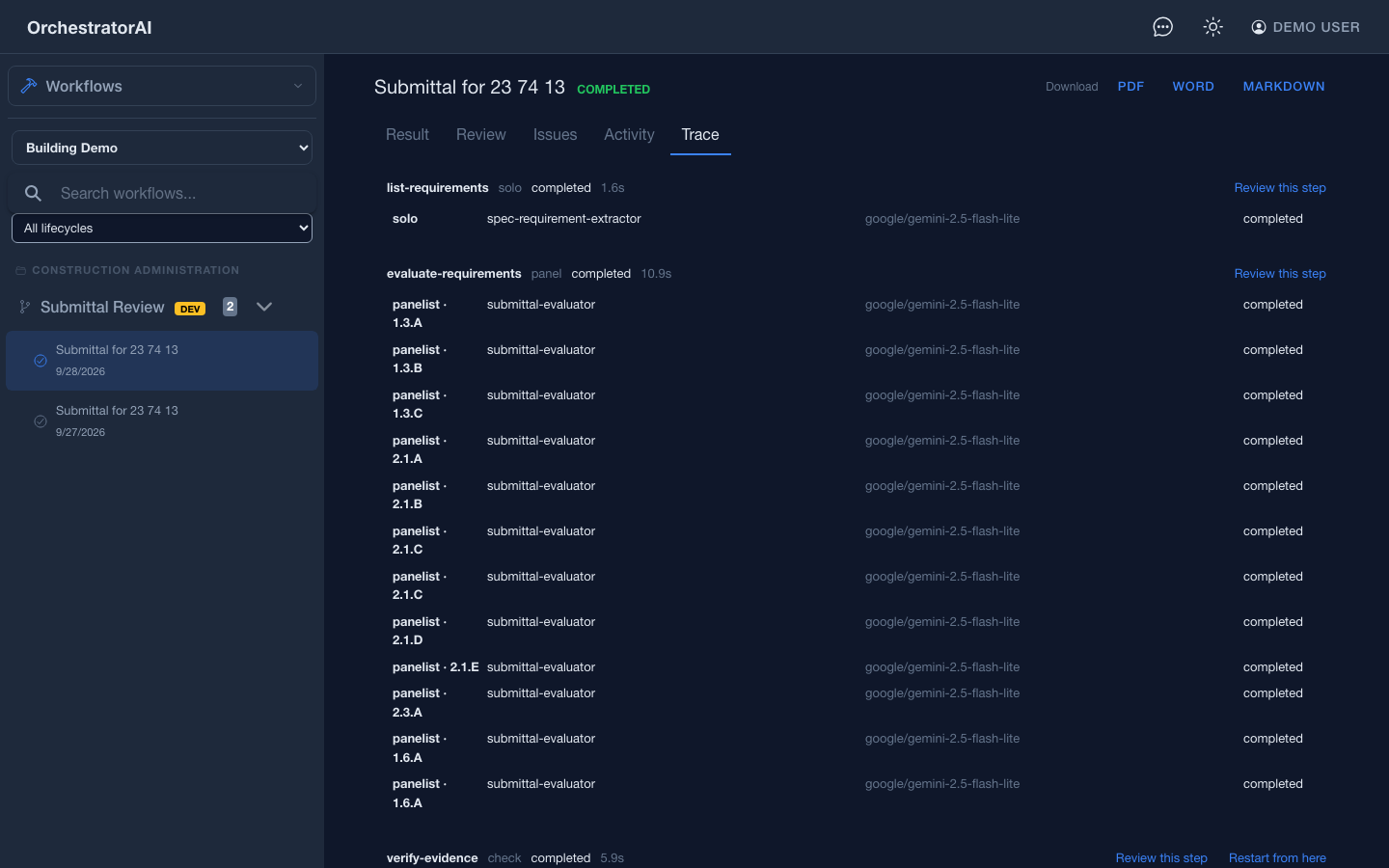
We start from the work, not the model: the inbox that fills up, the order that has to be checked, the document that gets read three times. Then we build the agent or workflow that does it, connected to your mail, your database, your files and your existing systems, with a person reviewing where a person should.
It runs as a durable workflow you can watch, pause and resume, not a chat window someone has to remember to open.
Teaching your own people to build agents and workflows, safely.
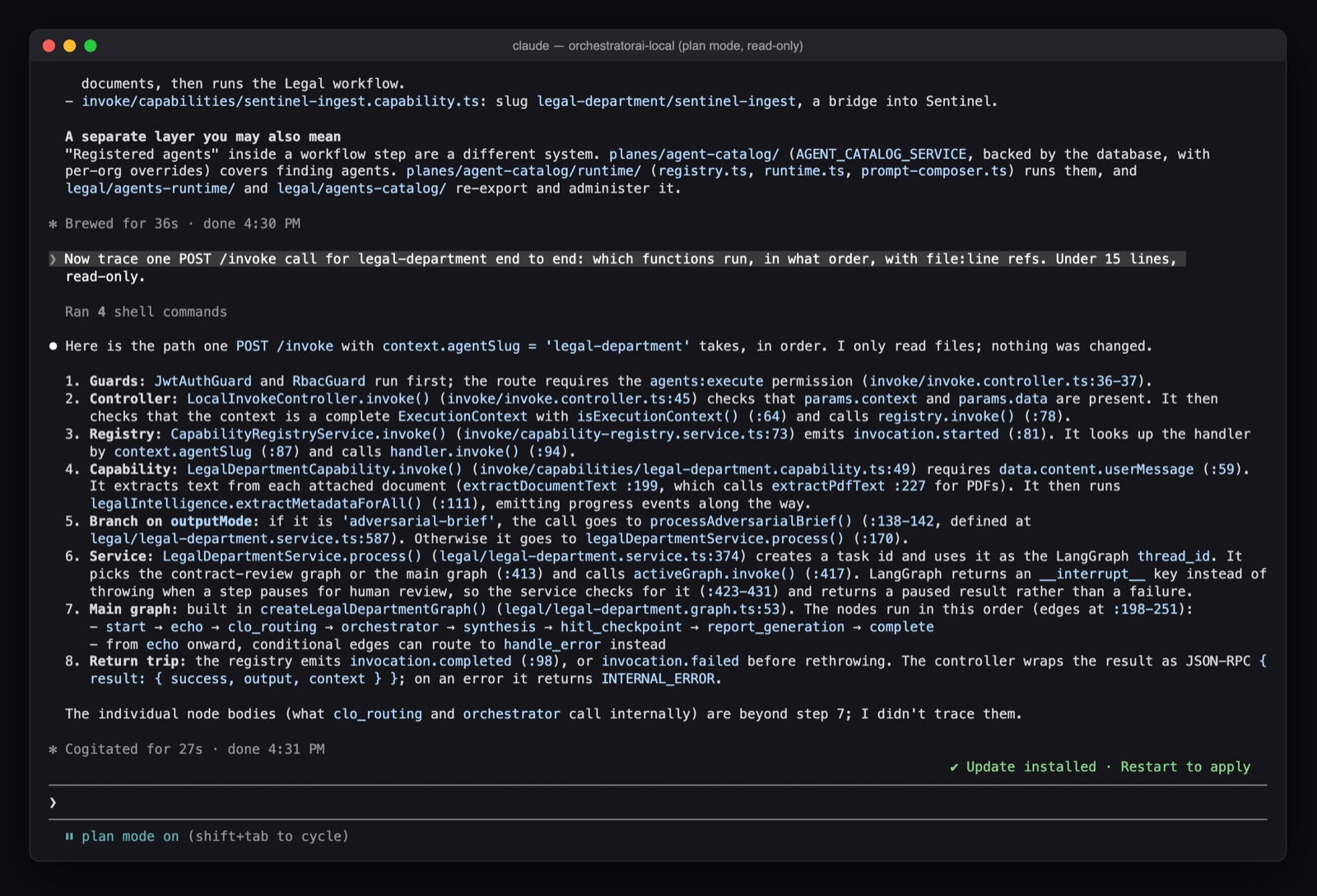
The people closest to the work usually know best what to automate. We work alongside them with the same tools we use every day, coding agents such as Claude Code and Cursor, until they can build and change their own agents and workflows.
Along the way they learn the habits that keep it safe: small changes, real tests, reviews before anything goes live, and no secrets where they don't belong.
A guardhouse around every agent, so nothing runs unchecked.
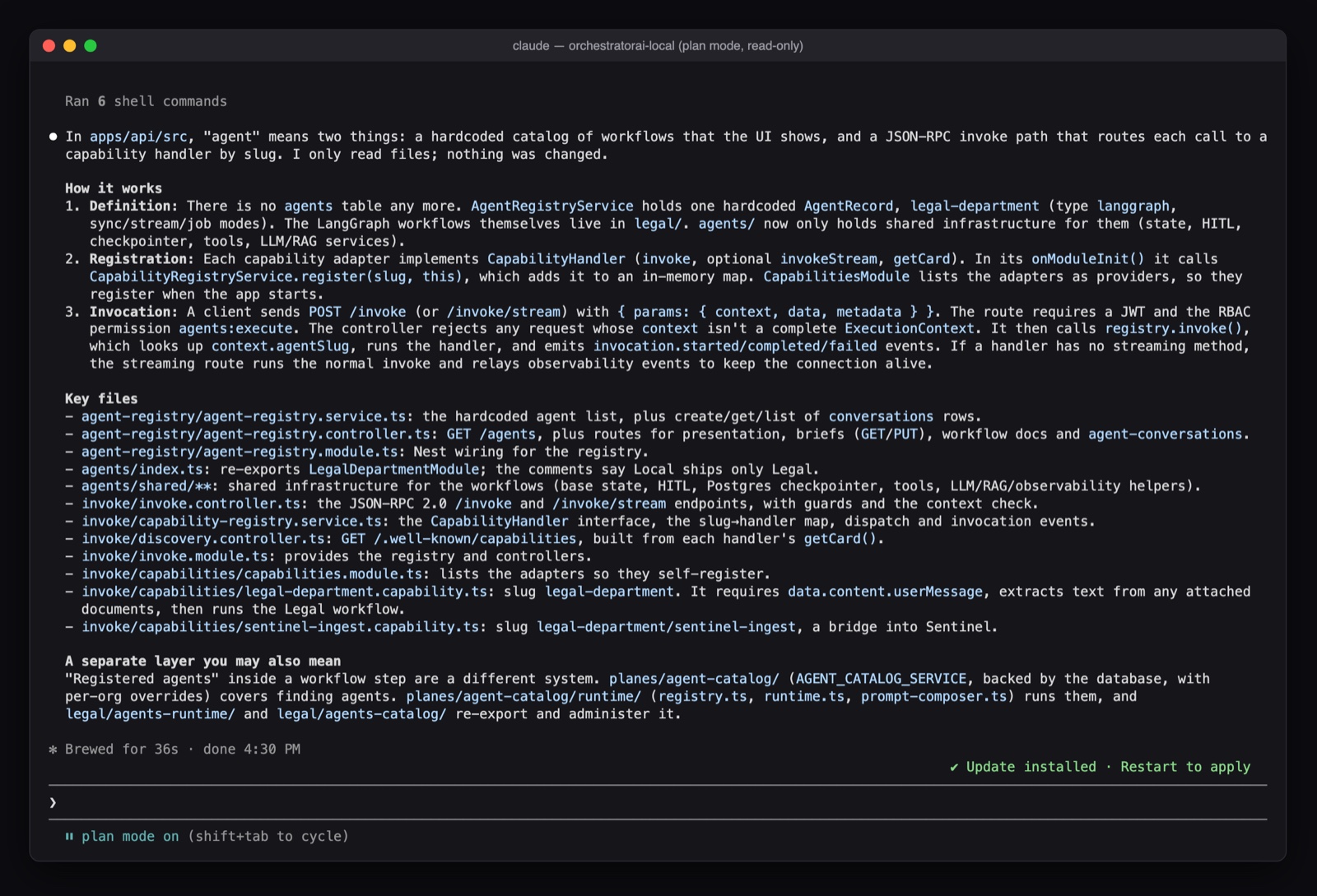
Every agent gets a door it has to come through: who may call it, what it may touch, and a record of what it did. Spending limits keep model costs where you set them, and approvals put a person in the run at the points that matter, before anything is sent, filed or paid.
Governance is built into the workflow itself, not written up in a policy afterwards.
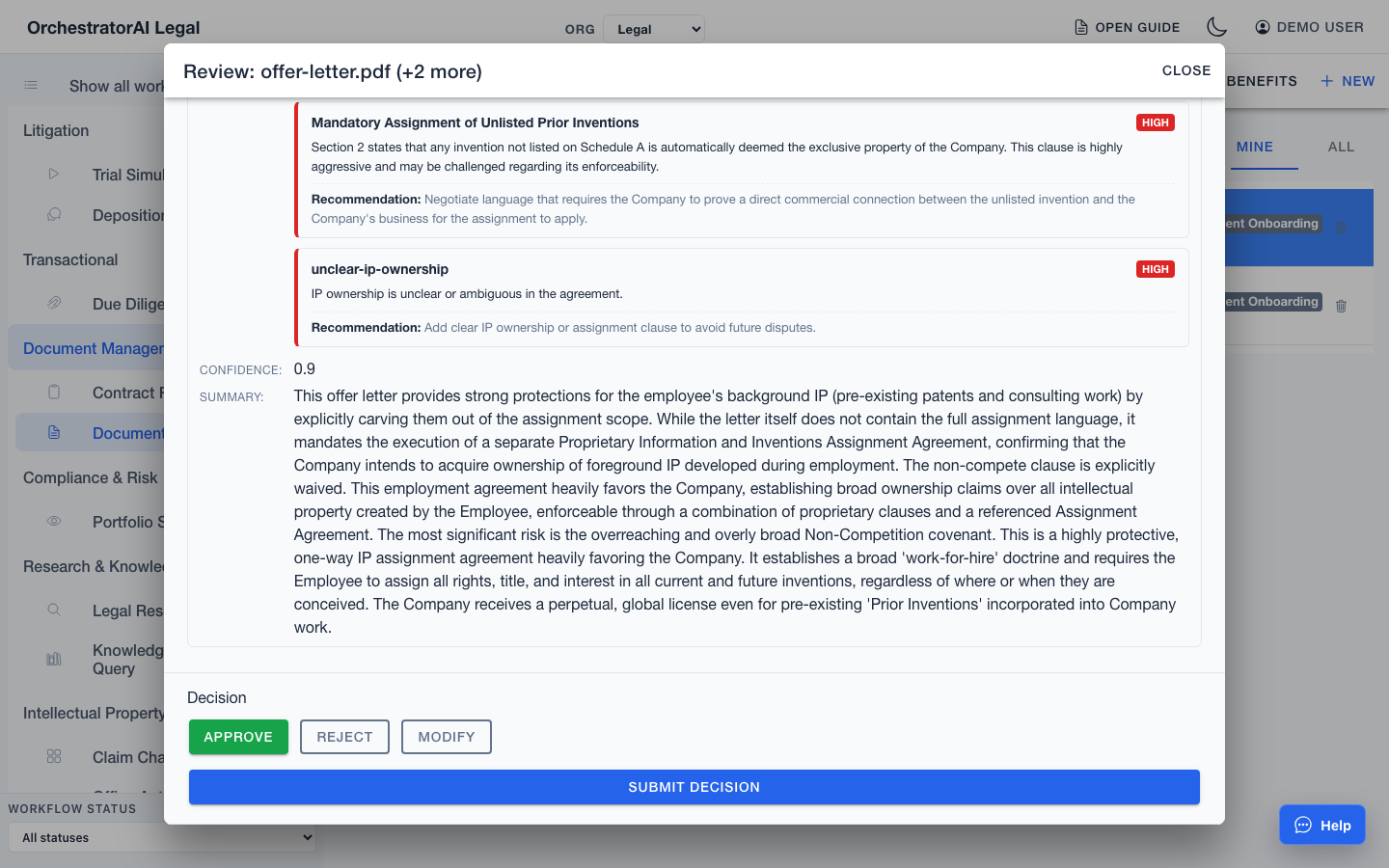
An installable OrchestratorAI bundle, set up for your business.
Rather than starting from a blank page, you start from a working platform: agents, workflows, admin and guardrails, installed on infrastructure you control and shaped around your own processes.
One example is a life-sciences e-commerce company, whose kit carries order intake and fulfillment workflows driven by its own database, with reviews in the tools its staff already use.
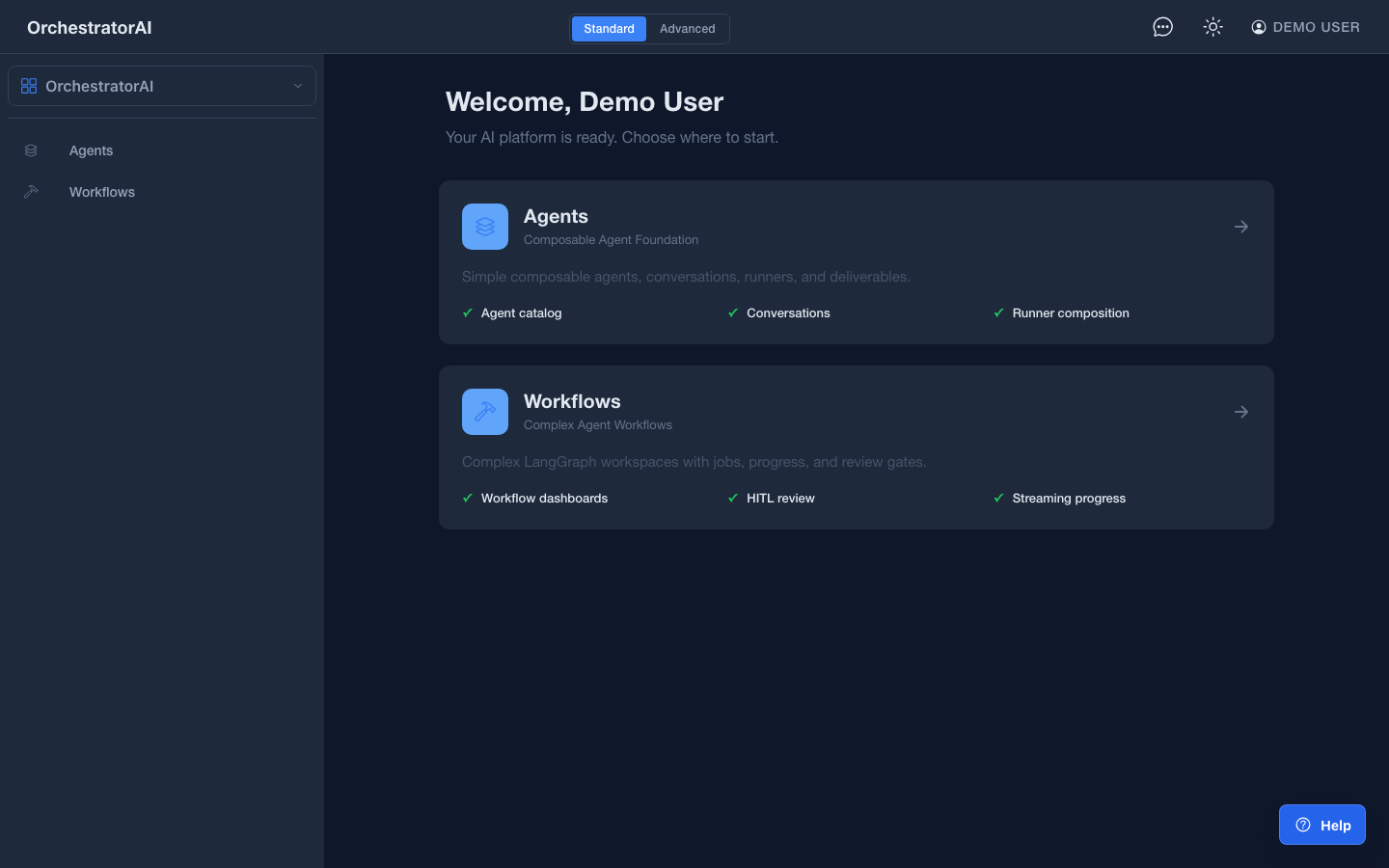
OrchestratorAI is currently working with a local bio labs fulfillment group to modernize their code and workflows on OrchestratorAI Enterprise — from the website through orders to fulfillment.
Underneath the work
Agents, workflows, ambient automation, admin and agent-to-agent access in one app and one API, running on infrastructure the organization controls. It is the platform the services above are delivered on.
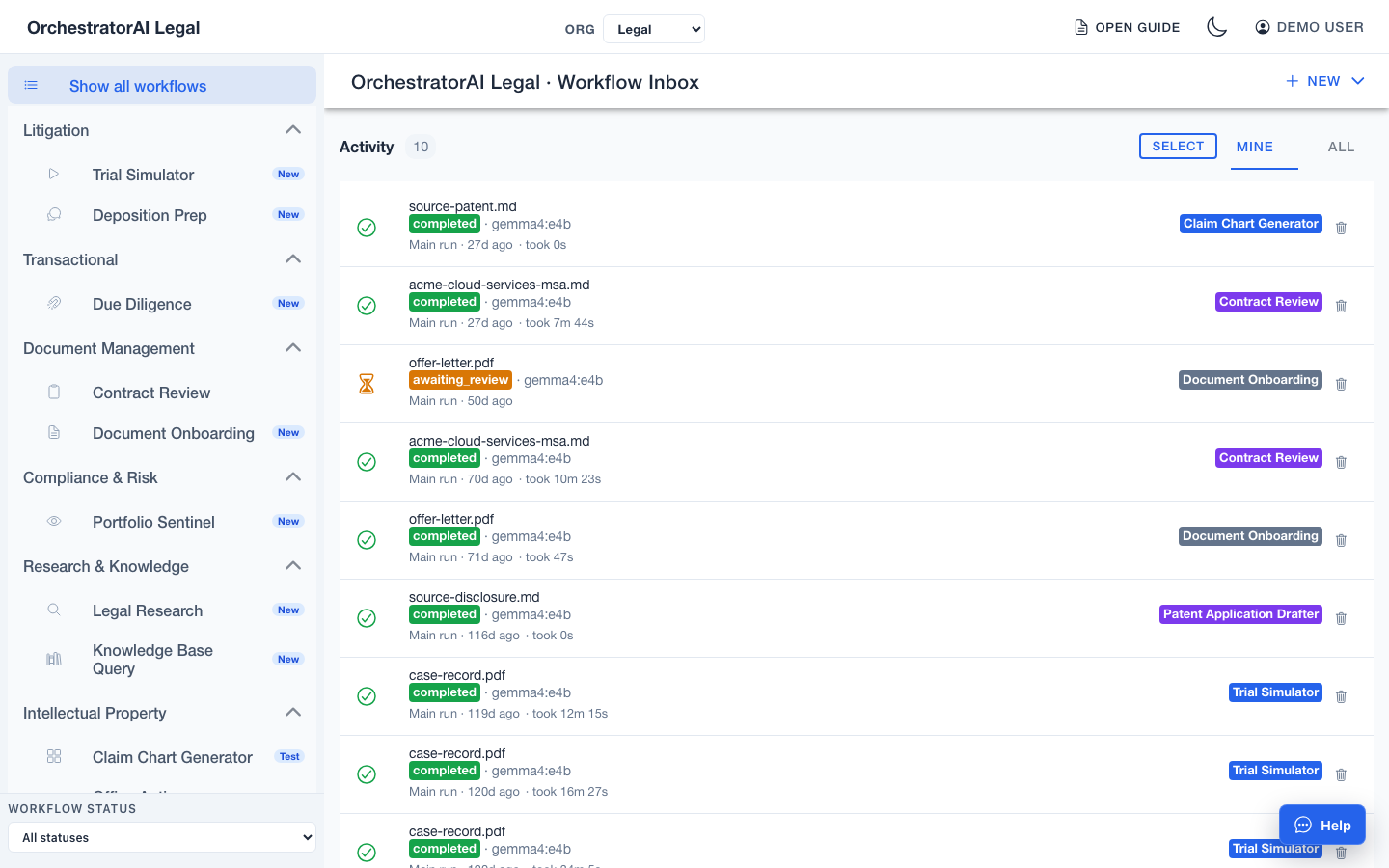
A local-first legal workbench for firms that cannot send client files to a public model: durable workflows from contract review to deposition prep, with attorney review as a real step in the run. It is a demo and a co-development path, not production-ready legal software, and there are no live vendor connectors.
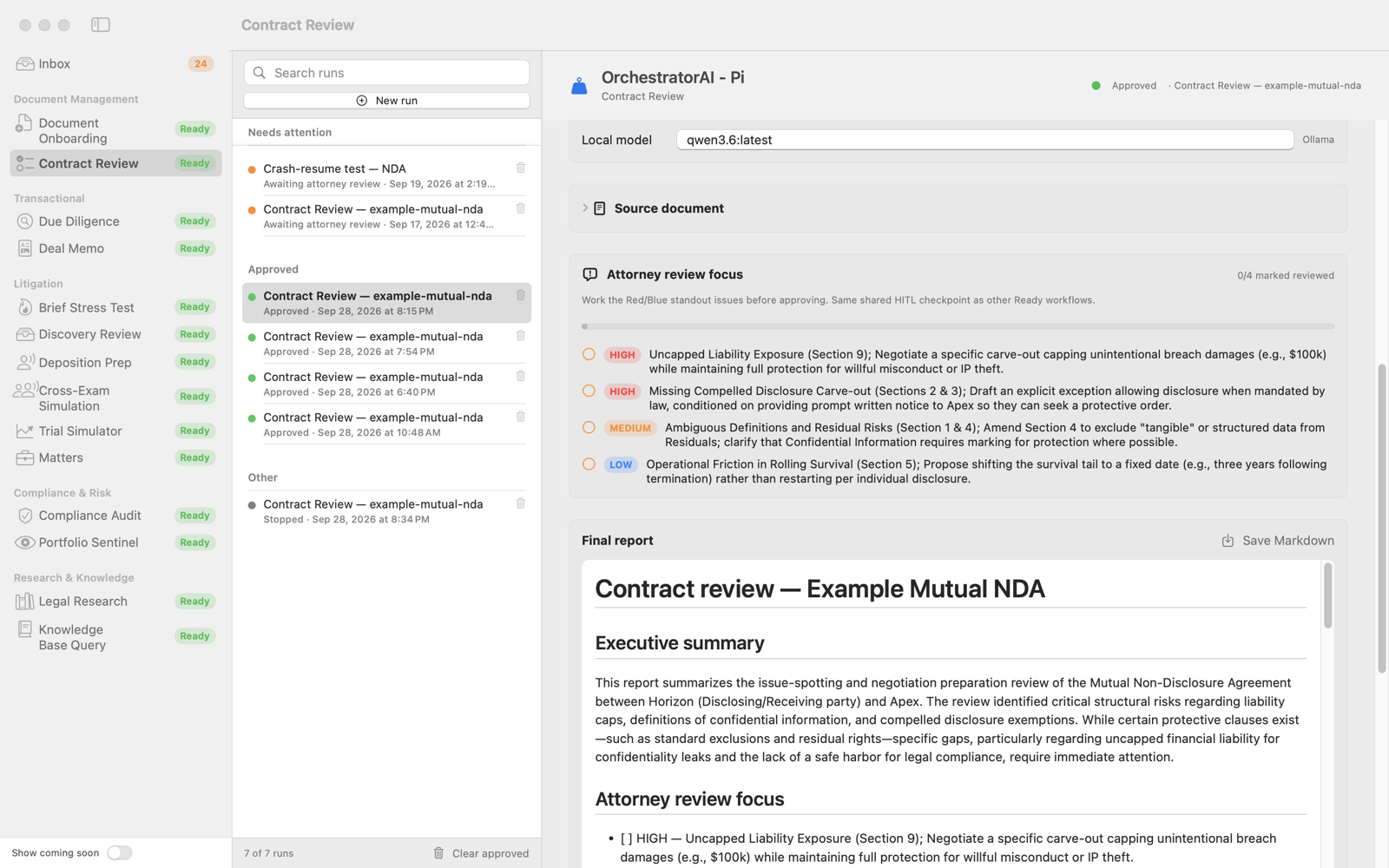
The legal workbench as a native Mac app, built on an open-source coding agent: the same workflows as single files, attorney gates mid-run, and a journal every run resumes from.
Pre-release: no public instance and no download yet.
Underneath the products sits Jev, the judgment layer: where a workflow needs a decision rather than more prose, a versioned rubric returns a typed, calibrated answer and sends the ambiguous ones to a person. It runs locally and has no public door of its own.
A short written guide for a small business that has started using AI and wants to be deliberate about it: questions worth answering, and pointers to the free public guidance it draws on. There is no app behind it, and it is early.
Email Matt at matt@orchestratorai.io.